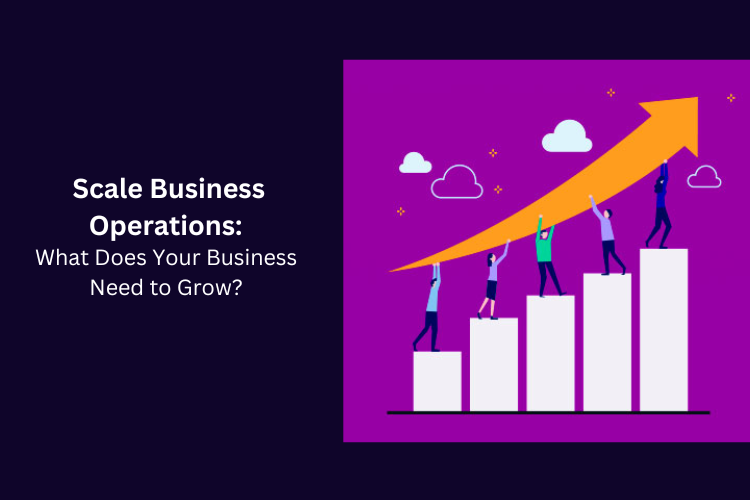
Business expansion brings both opportunities and hurdles. As businesses expand, they must deal with increased workloads and stringent operational requirements. Growth is about building the internal capacity to handle such expansion. If businesses don't have plans for scaling their operations, they may face inefficiencies and inconsistent results.
Scaling operations needs careful planning and a willingness to improve systems that may have worked effectively on a smaller scale. Many people mistakenly believe that scaling is just about increasing the number of people, resources or locations. While these elements are important, genuine operational scaling focuses on efficiency, consistency and sustainability. Businesses that scale successfully focus on minimising friction in their daily operations, ensuring seamless growth without confusion, delays or unnecessary expenses.
Technology is crucial for ensuring scalable operations. Automating processes improves visibility across functions and provides data for decision-making. However, relying only on technology doesn't ensure successful scaling. With the help of digital marketing expertise from Sales Magnitude, technology becomes a strong tool for efficient growth.
Financial discipline is crucial for scaling business operations successfully. Growth usually involves large investments. With careful planning, these investments can boost long-term efficiency rather than just short-term growth. Companies must adapt to market changes to remain sustainable while expanding.
Scaling business operations includes creating an effective framework that promotes growth while maintaining stability. It helps businesses expand their reach and adapt to changes in a rapidly evolving marketplace.
Benefits of Scaling Business Operations
Scaling operations is crucial for businesses to achieve sustainable expansion. As demand grows or markets change, traditional procedures and structures that once worked well may begin to fail. Scaling business operations helps companies handle higher volumes while maintaining quality and consistency.
Businesses must expand operations to remain efficient as their workload increases. When operations are not effectively scaled, teams often resort to hasty decisions to manage. This leads to higher error rates and employee fatigue. Scaling operations focuses on enhancing work processes so that higher outputs can be obtained with greater efficiency rather than with just more effort.
Scaling business operations enables informed decision-making. Growth creates complexity across locations and functions. Scaled operations require easier access to data, allowing businesses to make quick and accurate decisions. Operational transparency becomes increasingly important as firms grow.
Scaling operations also helps businesses adapt to change. Markets shift, and competitive pressures increase over time. Businesses with scalable operations are better positioned to respond to these changes due to their flexible processes and adaptable systems. This flexibility reduces risks and allows businesses to remain stable in difficult situations.
Growth that is not supported by scalable business operations often stagnates, making further expansion difficult and risky. Scalability provides an operational framework that promotes continual improvement and allows businesses to pursue new opportunities.
In essence, scaling business operations is about improving rather than expanding. It allows firms to grow with structure, maintain performance under pressure and develop the resilience needed to succeed in the long run.
Assessing Business Readiness for Scaling Business Operations
Many businesses want to expand as soon as they notice increased demand or new market opportunities. However, growth without preparedness can often lead to operational strain. Companies must review their readiness for growth before investing their resources in scaling business operations. This reveals whether existing systems and processes can handle increasing workloads without sacrificing efficiency or quality.
Evaluating readiness reveals internal constraints quickly. During smooth periods, operational hurdles or irregular workflows may go unnoticed; however, they become more apparent as demand increases. Identifying these weaknesses helps businesses improve their infrastructure before expanding. This proactive strategy reduces the risks of disruptions, delays and growing expenses, which are often linked to poorly planned expansion.
Examining a company's readiness also helps clarify the structure of the organisation and the alignment of leadership. As companies expand, unclear roles and the lack of formal decision-making processes can quickly become challenges. When a business is growing, it's important to check if the leadership teams are united on goals, duties and priorities. Clear accountability and solid decision-making procedures ensure business expansion efforts proceed smoothly.
Understanding team capacity and skill sets is another crucial element of checking readiness. Scaling business operations goes beyond just increasing staff size; it requires flexible teams that can handle new processes, tools and responsibilities. Businesses can plan their restructuring efforts that help growth without straining their staff by reviewing their current strengths and weaknesses.
Evaluating business preparedness provides a clear road map for confidently scaling business operations. Instead of relying on assumptions, businesses can now make expansion decisions based on actual data. They can focus on key improvements, optimise resource allocation and engage in scaling as a planned, strategic process.
Why is Goal Setting Necessary Before Scaling Business Operations?
Setting clear goals is a basic requirement for scaling business operations in an organised manner. Without specified objectives, growth attempts might become fragmented, resulting in wasted resources and unreliable outcomes. Clear goals help you stay on track and ensure every scaling effort supports the company's long-term goals instead of just reacting to short-term challenges.
Creating Alignment Across the Organisation
Setting clear goals before scaling business operations is critical for teamwork. As a company grows, various departments get involved with expansion activities. Clearly defined goals ensure everyone is working towards the same outcomes. This alignment reduces confusion and helps teams make thoughtful scaling decisions.
Defining the Purpose of Scaling
There are several ways to scale a business, such as expanding production capacity or entering new markets. Setting specific goals clarifies the purpose of scaling. When businesses understand the rationale behind their growth, they can focus on initiatives that provide real benefits instead of spreading their resources too thinly.
Establishing Measurable Benchmarks for Success
Setting goals before expanding your firm is also crucial because it helps you define measurable targets. Defined targets allow you to measure progress, evaluate performance and identify areas for improvement. Without precise standards, it is impossible to know whether scaling initiatives are producing the desired results or introducing new inefficiencies. Measurable goals help businesses make timely adjustments and maintain control as operations grow.
Supporting Smarter Resource Allocation
The establishment of clear goals influences how resources are allocated while scaling business operations. When goals are clearly established, organisations can identify which areas require immediate attention and which can be addressed later. This ensures limited resources are allocated to meet scaling objectives.
Conclusion
Scaling business operations requires clarity and long-term planning. While expansion often brings excitement and new opportunities, it also creates problems that cannot be managed by hasty decision-making. Companies that adopt a strategic approach to scaling are better able to continue operating efficiently as they grow.
Successful business scaling is about setting specific goals and adopting systems that can handle the increase in demand. Scaling isn't a one-time effort; it's a continual process of evaluation and refinement. Businesses' operational needs change over time, making ongoing improvement necessary.
The ability to balance ambition and reality is equally vital. Scaling too quickly without proper planning can strain resources and slow workflows. However, delaying critical changes might limit growth potential and reduce competitiveness. A structured approach helps businesses grow at a speed that is in line with their capabilities while being flexible enough to respond to market changes.
Scaling business operations involves building a solid foundation for long-term success. Businesses that align their processes and technologies around clear goals, they can grow with confidence and thrive in a changing business world.
Explore Sales Magnitude's digital marketing services for support with your marketing goals.