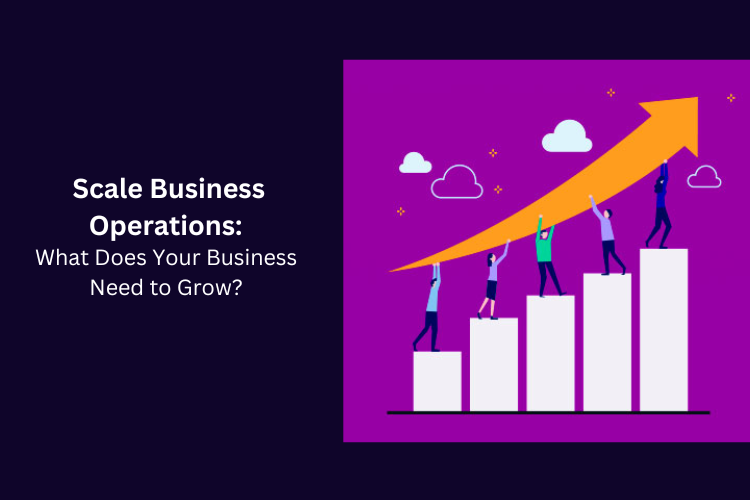
Growth is the primary objective of most companies. However, expansion alone is not enough for stability or long-term success. Many businesses go through times of rapid growth, followed by periods of stagnation. Scaling business operations allows companies to meet the growing demand without increasing their expenses. It calls for a deliberate, systematic approach that aligns all aspects of the firm towards long-term growth.
Knowing when the time is right is a crucial part of scaling. Expanding too early can stretch resources thin and expose gaps in processes. Delays can result in missed opportunities and stagnant growth. Recognising the optimal time to scale operations ensures consistent and sustainable growth.
Businesses often rely on manual processes during the early stages of growth. This is increasingly impractical as the business grows. A progressive mindset that prioritises data-driven decisions and the use of technology is crucial for scaling business operations. This helps companies manage increasing workloads and complex operations with little difficulty.
Companies on the path of expansion might find it difficult to provide consistent quality. However, consistency in customer experience is crucial for building trust and loyalty. Companies require plans that allow them to meet the demands of their customers with high-quality service. They can achieve this balance by combining well-defined processes and effective use of technology.
Scaling business operations is an ongoing process that requires constant development and modifications. Markets may shift, and new challenges may emerge. Businesses that remain adaptable and eager for ongoing development can scale their operations successfully. This blog explores the key aspects involved in scaling operations. Every factor is crucial to make growth manageable and meaningful. Understanding these principles allows firms to move beyond short-term growth and establish a foundation for long-term success.
Common Challenges Companies Face When Scaling Business Operations
Growing a business is a complex task. While growth creates new opportunities, it also adds complexity. Many companies wrongly believe that simply increasing revenue or demand is the key to achieving success. Business expansion without the right operational setup can create more problems.
Operational Inefficiencies Become More Visible
Scaling business operations magnifies existing inefficiencies. Processes that may have worked at a smaller scale may become hurdles when demand increases. Inconsistent practices and irregular implementation can hinder efficiency and result in mistakes. Delays and miscommunication become more frequent, affecting both productivity and customer satisfaction. Without clearly defined systems and streamlined workflows, scaling only amplifies these issues rather than resolving them.
Maintaining Consistency and Quality
Maintaining consistency is increasingly challenging as operations grow. As businesses experience rapid growth, there can be variations in the quality of their products or services. Delayed delivery and poor quality control may affect brand reputation and reduce customer trust. Companies need clear quality standards and effective monitoring systems to make sure their growth won't compromise their reliability.
Cash Flow and Financial Pressure
Scaling requires large investments. However, increased spending does not always result in more revenue. Many companies overlook the crucial financial implications of scaling business operations. Sudden expenses and poor resource management can put a significant strain on your finances. Balancing investment and profitability is crucial to ensure financial stability as you grow.
Risk of Overexpansion
Many companies are tempted to scale too rapidly. Rapid expansion without enough preparation can result in operational chaos and financial strain. Sustainable scaling requires measured, strategic growth rather than aggressive expansion.
Scaling business operations is about more than just doing more; it is also about doing more efficiently. Businesses that address these issues early can scale successfully without compromising stability or performance.
Adapting to Market Changes While Scaling Business Operations
Scaling a firm is not an isolated event. Markets are continually shifting due to changing customer demands and external variables like economic fluctuations. In today's landscape, adjusting to market shifts is essential for effectively scaling business operations.
Staying in sync with market conditions is a key aspect of adaptation. Many businesses base their expansion on existing processes. However, what worked previously may not remain effective in a changing market. Continuously monitoring customer behaviour and industry trends allows businesses to identify shifts early and respond proactively.
Customer expectations shift rapidly as businesses scale. They expect quicker service and consistent quality across all touchpoints. Adapting to these changing demands requires re-evaluating existing processes to ensure they are flexible enough to cater to the change. Businesses that balance standardisation and personalisation are better positioned to retain customers while expanding their reach.
Technology helps businesses adapt during periods of growth. Businesses can collect performance data and understand market dynamics by using automation tools and integrated platforms. This helps them make informed decisions quickly. However, the emphasis should be on using technology to improve adaptability and meet changing company needs.
External factors like economic fluctuations and industry disruptions can further complicate the scaling process. Businesses should be able to adjust their strategies in response to these factors. At the same time, it is crucial to avoid overreacting to every market change. Every change may not require immediate action, and repeatedly changing strategies can result in instability. The challenge is to distinguish between short-term trends and long-term shifts and respond accordingly. Businesses can remain focused and still be adaptable by adopting a balanced approach.
Adapting to market changes while scaling business operations is about building resilience into the growth process. Businesses that are aligned with the market can achieve rapid, sustainable growth.
The Benefits of Scaling Business Operations Through Multi-Channel Strategies
Relying on a single channel to attract leads or boost revenue is increasingly limiting as a business expands. Scaling business operations through multiple channels is more than just a growth tactic; it provides resilience and long-term scalability. Multi-channel strategies enable businesses to reach wider audiences and build a more stable operational model.
A multi-channel strategy helps businesses diversify revenue streams. Dependence on a single channel exposes companies to risks such as market fluctuations or shifts in customer behaviour. By expanding across channels such as social media and email marketing, businesses create multiple pathways for growth. This strengthens the overall business model and makes scaling business operations more stable.
Different customer segments use different platforms and channels. Businesses can interact with a wide range of audiences by using a multi-channel approach. For example, while some buyers may find a brand through social media, others may prefer search engines. Businesses may meet demand at different phases of the customer journey by being present at many different touchpoints.
Efficiency is another important benefit. While managing multiple channels may seem complex, it often leads to better optimisation of resources when supported by the right systems and tools. Automation and centralised management platforms allow businesses to streamline operations across channels. Businesses can handle higher volumes of activity without a proportional increase in operational costs.
However, it is crucial to approach multi-channel growth wisely. Simply being visible on several platforms is not enough; firms should ensure their activities are coordinated and connected. Without this connection, multi-channel activities might become fragmented, limiting business growth.
Digital marketing plays a central role in enabling effective multi-channel strategies. With the help of experienced firms like Sales Magnitude, scaling business operations becomes easier for companies across industries.
Conclusion
Business growth involves more than just increasing output or expanding reach; it is also about developing the ability to grow efficiently and sustainably. As firms grow past their early stages, the emphasis should shift from short-term profits to long-term operational success. This requires flexibility and an openness to constant improvement.
There are many facets to scaling business operations. Each element is crucial for growth, from strengthening internal systems to enhancing the customer experience. Businesses that adopt effective strategies can handle increased demand without sacrificing performance.
Expanding a business presents many difficulties. Operational inefficiencies and changing market conditions can lead to a host of challenges. By taking proactive measures to tackle these challenges, businesses can create robust systems that promote ongoing growth. The capacity to remain flexible in a constantly changing environment is just as crucial. New opportunities arise as markets shift. Companies need flexibility and proper planning for scaling business operations successfully.
Business expansion is not a one-time occurrence; it is a continuous process that requires careful planning and informed decisions. Businesses can go beyond simply growing by focusing on developing strong foundations and aligning tactics with long-term goals.
Explore Sales Magnitude's digital marketing services for support with your marketing goals.